
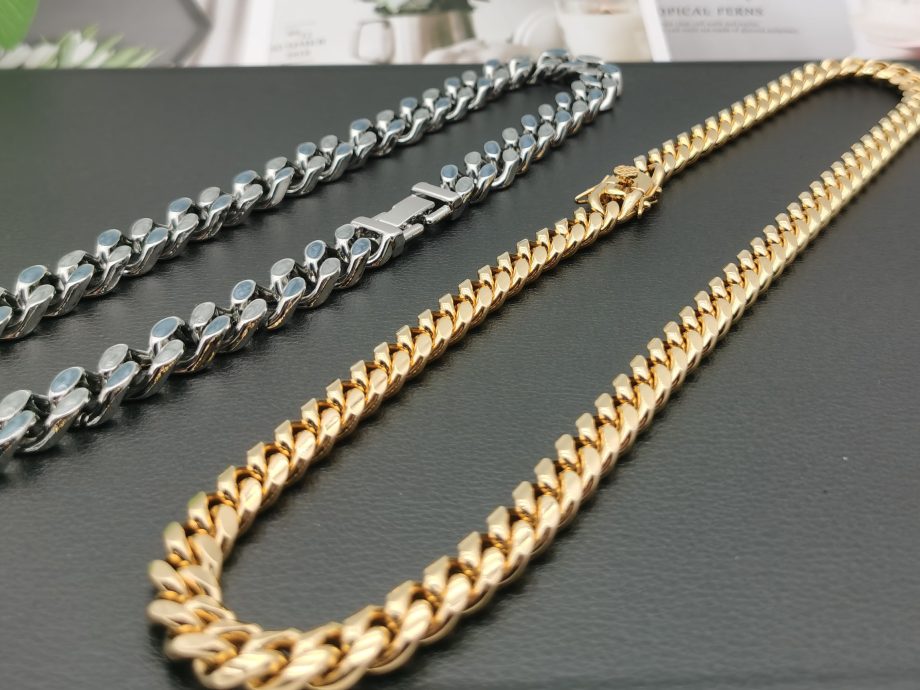
Cuban link chain production varies with material, construction, equipment, finish and the requirements of the supplier. A general process overview can help buyers ask better questions, but it should not be treated as the confirmed manufacturing route for a specific product.
1. Translate the style into a specification
Before production, define the product reference, base material, link profile, length, width, thickness, weight basis, clasp, construction, finish and any decorative elements. A reference image alone can correspond to several constructions. The written specification and approved sample should identify which characteristics control the order.
2. Form repeatable links
Material is formed and cut into link elements using a process suited to the design and production setup. Consistency in dimensions affects how the links assemble and how the finished chain lies. Buyers do not need to prescribe factory equipment, but they can define the measured result and acceptable variation.
3. Assemble and join the chain
Links are interlocked and joined using the supplier’s appropriate method. The joining process, heat input and later finishing depend on material and construction. Review visible joins, link security and articulation on the sample. Do not assume that a method used for one material is appropriate for every other chain.
4. Align the Cuban link profile
The assembled chain is worked so the links create the intended flat or repeating profile. Alignment influences drape, reflection and the consistency visible across a long chain. Inspect both relaxed and handled positions. A chain should be assessed using agreed appearance and functional criteria, not only one carefully arranged photograph.
5. Refine edges and surfaces
Surface preparation can include smoothing, polishing or other finishing steps before a final color or coating is applied. The process varies with the base material and visual target. Buyers should approve a representative appearance and state which scratches, marks, rough edges or finish gaps are unacceptable.
6. Apply decorative finish or stones
Where applicable, plating, coating, texture or decorative elements are added using the specified process. Confirm whether clasp and connector components receive the same finish. For iced styles, define stone type, size range, color tolerance, placement and setting expectations separately.
7. Add the clasp and final components
The clasp, end connections, pendant or other functional parts are assembled and checked. Confirm operating clearance, connection strength, edges and compatibility with the selected chain dimensions. The clasp can be a meaningful part of weight and visual balance.
8. Inspect, pack and identify variants
Final checks should connect the product to the correct length, width, color, label and packaging. Agree how appearance, measurements, function and packaging will be sampled or inspected. The pack-out instruction should prevent chains from tangling, rubbing or being mixed between similar variants.
Buyer questions for the production review
- Which specification and sample version control production?
- How are link dimensions, alignment and joins checked?
- What surface and finish criteria are inspected?
- How are clasp function and decorative elements reviewed?
- How are variants labeled and protected during packing?
- How are approved changes recorded before bulk production?
Pair this overview with the sample review process and include measurable acceptance fields in the buying brief.