
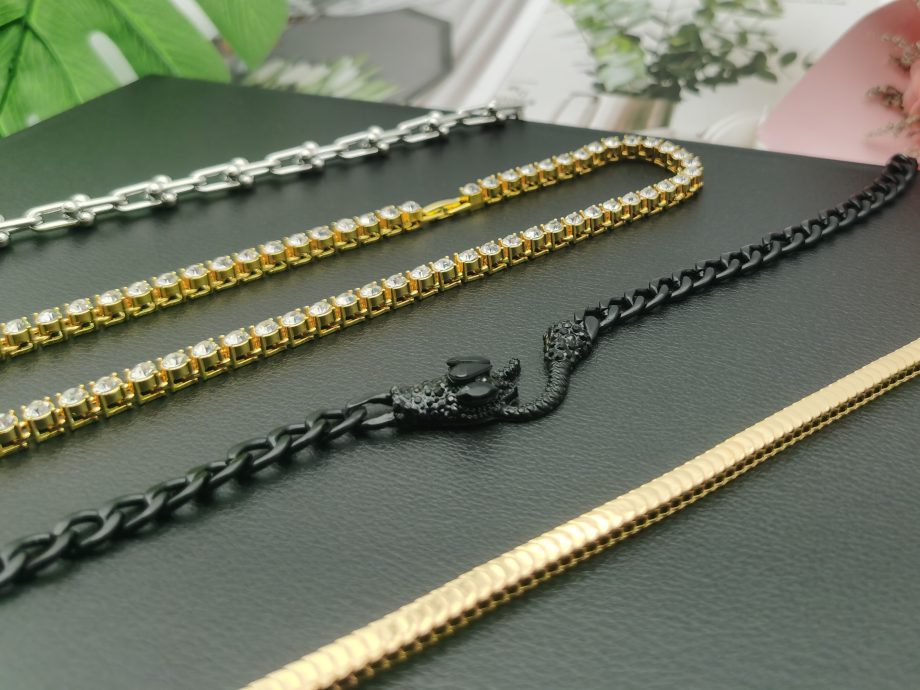
Cuban link chains can be produced using different base materials and surface finishes. The same visible color may appear on several material systems, and two chains described with the same broad word can still differ in grade, construction or coating. Buyers should compare a documented product specification rather than rank materials from appearance alone.
Separate base material from surface finish
The base material is the structure beneath any plating, coating or decorative layer. The surface finish describes what creates the visible color and texture. Record both. A phrase such as “gold chain” can be ambiguous: it may refer to color, plating or precious-metal content. Use a precise material statement only when suitable evidence supports it.
Stainless steel
When a chain is described as stainless steel, ask for the represented grade or composition, construction, finish process and product-specific documentation. Do not assume that all stainless steels have identical corrosion, skin-contact or regulatory characteristics. Review the exact chain under the expected wear, care and destination requirements.
Silver and silver-tone descriptions
“Silver tone” describes appearance. A silver-material or fineness statement is different and should be supported by the applicable product record and marking requirements. Confirm whether the finish is polished, plated, coated or otherwise treated, and request care guidance for the complete product.
Gold-tone and plated finishes
Gold tone is an appearance term and does not establish precious-metal purity. If plating is specified, record the base material, process, color reference and any thickness or test requirement relevant to the order. Appearance and wear depend on the complete product, exposure and care; avoid universal lifetime or waterproof claims.
Other alloys and mixed materials
Some chains may use other alloys, stones, adhesives, coatings, springs or clasp components. Ask whether the stated material applies to the complete item or only the main chain. Mixed components can affect labeling, testing, care and end-of-life claims.
Compare construction and weight
Material should be reviewed together with solid, hollow or other construction descriptions, link dimensions and weight for the exact option. A heavier chain is not automatically more suitable, and a lighter chain is not automatically lower quality. Suitability depends on customer use, price position, handling, approved specification and commercial requirements.
Evidence and sample questions
- What base material and grade or composition is represented?
- What surface finish and color reference apply?
- Which components use a different material?
- What dimensions, weight and construction apply to the selected option?
- Which reports, declarations or tests cover the destination and sales channel?
- What care, packaging and storage conditions are recommended?
Use the materials buyer checklist for a complete request and the sample comparison guide before approving the physical reference.