
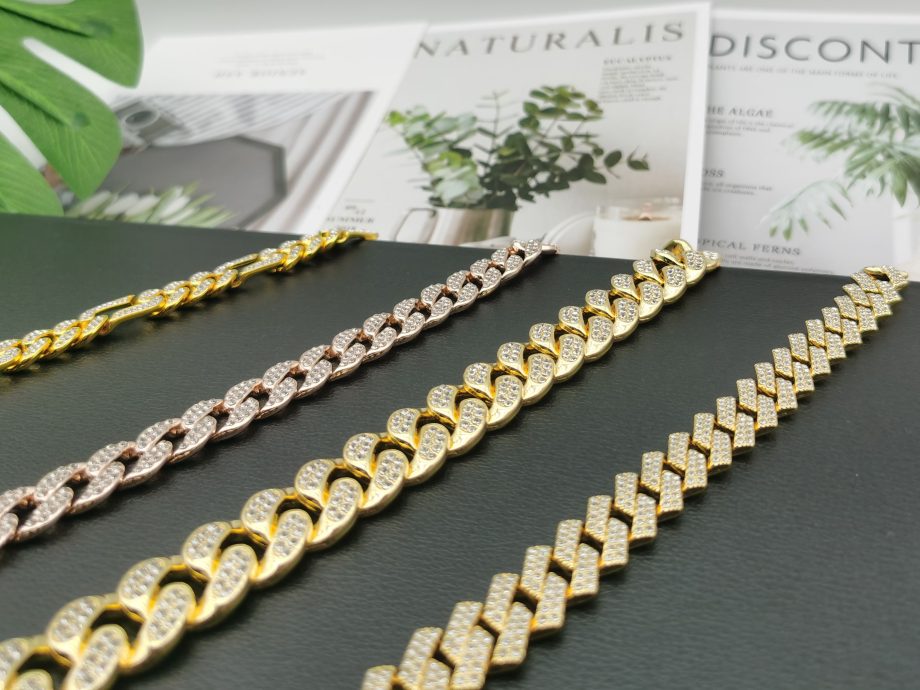
Cuban link chains are widely associated with Miami jewelry culture and the visual language of hip-hop, but simplified origin stories are often repeated without reliable sourcing. Retailers can explain the style responsibly by focusing on its recognizable construction, documented cultural associations and contemporary use rather than presenting one unverified story as settled history.
What the name describes today
In current jewelry catalogs, “Cuban link” generally refers to interlocking links arranged into a strong, repeating profile that can lie relatively flat. The category includes many widths, lengths, constructions, clasps, materials and finishes. The name identifies a style family; it does not establish where a specific product was made or what material it contains.
Miami and hip-hop associations
The style is strongly connected in modern popular culture with Miami and with artists and communities that made substantial chains part of a visible fashion language. That association has influenced photography, music imagery, streetwear and later mainstream styling. A responsible product page can acknowledge this context without claiming a single inventor or exact date unless a credible source supports it.
Why the design remains recognizable
The repeating link pattern creates a clear visual identity at narrow and wide scales. Different widths can move from layering to stand-alone statement roles. Polished, plated, coated or iced finishes change the surface appearance, while length, weight, clasp and construction affect how the chain handles and sits.
From statement chain to broader assortment
Contemporary catalogs apply Cuban link language to necklaces, bracelets and designs combined with pendants, stones or mixed motifs. Retailers should still assign each product to the category that matches the actual item. A necklace and bracelet with similar links need distinct product titles, measurements, images and variant records.
How to write accurate cultural context
- Distinguish a documented fact from a commonly repeated account.
- Avoid assigning an origin, identity or meaning to every wearer.
- Describe the visible design before adding cultural background.
- Do not use cultural language to imply material value or authenticity.
- Credit reliable sources when making specific historical claims.
How to connect history with product data
Cultural context can explain why the style is recognizable, but the buying decision still depends on the exact product. Record base material, finish, dimensions, weight, construction, clasp, decorative elements, care and commercial terms. This keeps editorial storytelling from replacing the specification.
For product comparison, continue with Cuban link chain basics and the chain width guide.